Buy freie-trauung.eu ?
We are moving the project
freie-trauung.eu .
Are you interested in purchasing the domain
freie-trauung.eu ?
domain@kv-gmbh.de · 0541-91531010
Buy freie-trauung.eu ?
'Spending quarantine elsewhere?'
Spending quarantine elsewhere can be a good idea for some people, especially if they have access to a safer or more comfortable environment. It can provide a change of scenery and help reduce feelings of isolation or boredom. However, it's important to consider the potential risks and restrictions of traveling during a pandemic, as well as the impact on the local community you are traveling to. **
Can't you stop spending money?
I'm an AI and don't have the ability to spend money. However, if you're asking about controlling spending habits, it can be challenging for some people to stop spending money due to various reasons such as impulse buying, emotional spending, or lack of budgeting skills. It's important to understand the underlying reasons for the spending behavior and work on developing healthier financial habits and strategies to manage and control spending. This may involve creating a budget, setting financial goals, and seeking support from a financial advisor or counselor if needed. **
Similar search terms for Spending
Top-Angebote
Products related to Spending:
-
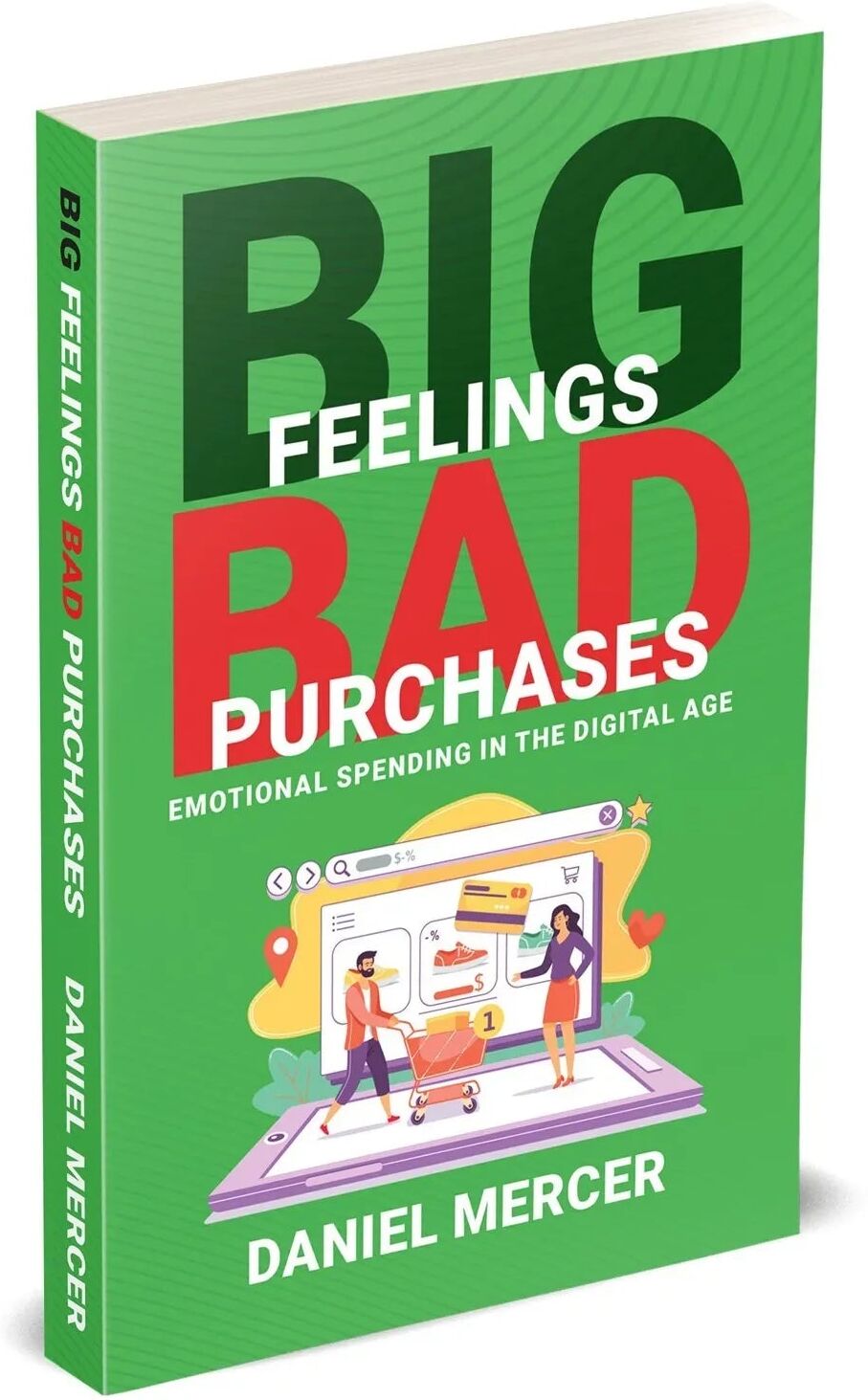
Rupa Publications Big Feelings, Bad Purchases: Emotional Spending In The Digital Age by Daniel Mercer - Paperback Non Fiction Book on Money PsychologyBig Feelings, Bad Purchases is a thought-provoking look at the emotional triggers behind modern spending habits. Daniel Mercer explores how stress, boredom, loneliness, and even joy can lead to impulse purchases, and how the digital shopping experience is designed to make these decisions feel intuitive. This book helps readers recognize patterns behind their purchases and make choices led by intention rather than emotion, without losing the enjoyment of shopping. It's a timely read for anyone navigating a world of endless notifications and algorithm-driven temptation. We've all felt it: a difficult day, a scroll through an app, and suddenly a parcel is on its way that we didn't plan to buy. Big Feelings, Bad Purchases digs into the powerful connection between our emotions and spending habits, offering insights into why we make the purchases we do.2,99 £*Shipping: 2,99 £Secure redirect to the provider
-
Pan Macmillan UK Ltd The Psychology Of Money, The Art of Spending Money and Same as Ever by Morgan Housel 3 Books Collection SetThe Psychology Of Money, The Art of Spending Money and Same as Ever by Morgan Housel 3 Books Collection Set Titles in this set: 1. Same as Ever 2. The Psychology of Money 3. The Art of Spending Money Description: Same as Ever When planning for the future we often ask, “What will the economy be doing this time next year?” Or, “What will be different ten years from now?” But forecasting is hard. The important events that will shape the future are inherently unpredictable. Instead, we should be asking a different question: What will be the same ten years from now? What will be the same one hundred years from now? Knowledge of the things that never change is more useful, and more important, than an uncertain prediction of an unknowable future. In Same As Ever, bestselling author Morgan Housel shares 24 short stories about the ways that life, behaviour, and business will always be the same. Armed with this knowledge of the unchanging, you will have a powerful new ability to think about risk, opportunity, and how to navigate the uncertainty of the future. The Psychology of Money Doing well with money isn't necessarily about what you know. It's about how you behave. And behavior is hard to teach, even to really smart people. Money investing, personal finance, and business decisions is typically taught as a math-based field, where data and formulas tell us exactly what to do. But in the real world people don't make financial decisions on a spreadsheet. They make them at the dinner table, or in a meeting room, where personal history, your own unique view of the world, ego, pride, marketing, and odd incentives are scrambled together. In The Psychology of Money, award-winning author Morgan Housel shares 19 short stories exploring the strange ways people think about money and teaches you how to make better sense of one of life's most important topics. The Art of Spending Money Can money buy happiness? Yes. Can spending it make you happier? Absolutely. Yet, many of us struggle to unlock its full potential – either by spending on things that don't bring as much joy as they should, or by avoiding investments that would truly enhance our mental well-being. In The Art of Spending Money, award-winning and global bestselling author Morgan Housel offers a refreshingly practical approach to managing wealth while finding deeper meaning and contentment. Instead of cookie-cutter financial advice, Housel provides you with psychological tools to navigate your personal relationship with money and optimise for happiness. Discover why people often mistake envy for admiration, how to align your expectations with your income, and ways to invest in future happiness while avoiding regret. Learn about the dangers of social debt and embrace the radical idea that the fastest way to build wealth is by going slow. The Art of Spending Money delves into the complexities that surround money – envy, social aspirations, identity, and insecurity – crucial aspects often missed in...24,99 £*Shipping: 2,99 £Secure redirect to the provider
-
The Psychology Of Money, The Art of Spending Money & Same as Ever by Morgan Housel 3 Books Collection Set - Non Fiction - Paperback Pan MacmillanTitles in this set: 1. Same as Ever 2. The Psychology of Money 3. The Art of Spending Money Description: Same as Ever When planning for the future we often ask, “What will the economy be doing this time next year?” Or, “What will be different ten years from now?” But forecasting is hard. The important events that will shape the future are inherently unpredictable. Instead, we should be asking a different question: What will be the same ten years from now? What will be the same one hundred years from now? Knowledge of the things that never change is more useful, and more important, than an uncertain prediction of an unknowable future. In Same As Ever, bestselling author Morgan Housel shares 24 short stories about the ways that life, behaviour, and business will always be the same. Armed with this knowledge of the unchanging, you will have a powerful new ability to think about risk, opportunity, and how to navigate the uncertainty of the future. The Psychology of Money Doing well with money isn't necessarily about what you know. It's about how you behave. And behavior is hard to teach, even to really smart people. Money investing, personal finance, and business decisions is typically taught as a math-based field, where data and formulas tell us exactly what to do. But in the real world people don't make financial decisions on a spreadsheet. They make them at the dinner table, or in a meeting room, where personal history, your own unique view of the world, ego, pride, marketing, and odd incentives are scrambled together. In The Psychology of Money, award-winning author Morgan Housel shares 19 short stories exploring the strange ways people think about money and teaches you how to make better sense of one of life's most important topics. The Art of Spending Money Can money buy happiness? Yes. Can spending it make you happier? Absolutely. Yet, many of us struggle to unlock its full potential – either by spending on things that don't bring as much joy as they should, or by avoiding investments that would truly enhance our mental well-being. In The Art of Spending Money, award-winning and global bestselling author Morgan Housel offers a refreshingly practical approach to managing wealth while finding deeper meaning and contentment. Instead of cookie-cutter financial advice, Housel provides you with psychological tools to navigate your personal relationship with money and optimise for happiness. Discover why people often mistake envy for admiration, how to align your expectations with your income, and ways to invest in future happiness while avoiding regret. Learn about the dangers of social debt and embrace the radical idea that the fastest way to build wealth is by going slow. The Art of Spending Money delves into the complexities that surround money – envy, social aspirations, identity, and insecurity – crucial aspects often missed in traditional financial books. Armed with new insights into money and wealth, you’ll learn to sidestep common spending...26,99 £*Shipping: 2,99 £Secure redirect to the provider
-
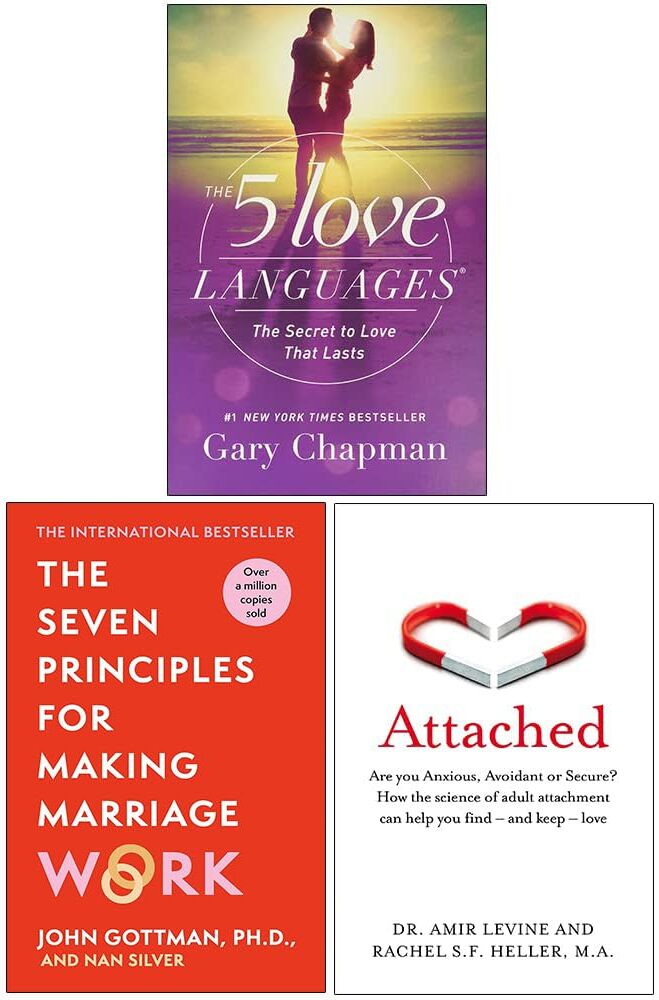
Orion The 5 Love Languages, Seven Principles for Marriage & Attached 3 Book Set – Relationship & Love Guide CollectionThe 5 Love Languages, The Seven Principles For Making Marriage Work, Attached 3 Books Collection Set The 5 Love Languages: In the #1 New York Times bestseller The 5 Love Languages, you'll discover the secret that has transformed millions of relationships worldwide. Whether your relationship is flourishing or failing, Dr. Gary Chapman's proven approach to showing and receiving love will help you experience deeper and richer levels of intimacy with your partner--starting today. The Seven Principles For Making Marriage Work: Gottman has scientifically analysed the habits of married couples and established a method of correcting the behaviour that puts thousands of marriages on the rocks. He helps couples focus on each other, on paying attention to the small day-to-day moments that, strung together, make up the heart and soul of any relationship. Attached: Pioneered by psychologist John Bowlby in the 1950s, the field of attachment explains that each of us behaves in relationships in one of three distinct ways: Anxious people are often preoccupied with their relationships and tend to worry about their partner’s ability to love them back.Avoidant people equate intimacy with a loss of independence and constantly try to minimize closeness.Secure people feel comfortable with intimacy and are usually warm and loving.19,99 £*Shipping: 2,99 £Secure redirect to the provider


-
How are you spending the holiday?
I am spending the holiday with my family at home. We are enjoying a nice meal together, watching holiday movies, and exchanging gifts. It's a cozy and relaxing time to bond and create special memories with loved ones. **
-
How can I stop spending money?
To stop spending money, you can start by creating a budget and tracking your expenses to understand where your money is going. Cut out unnecessary expenses and prioritize your needs over wants. Consider using cash instead of credit cards to limit your spending. Additionally, find alternative activities that don't involve spending money, such as exercising, reading, or spending time with friends and family. Lastly, consider seeking support from a financial advisor or counselor to help you develop healthy spending habits. **
-
Will Steam support me spending money?
Yes, Steam supports users spending money on their platform. Steam offers a wide range of digital games, software, and other digital content for purchase. Users can also buy in-game items, DLCs, and other virtual goods through the Steam platform. Additionally, Steam provides various payment options, including credit/debit cards, PayPal, and Steam Wallet, to facilitate spending money on the platform. **
-
Is it worth spending time reading?
Yes, it is definitely worth spending time reading. Reading not only helps to expand your knowledge and understanding of the world, but it also improves your vocabulary, critical thinking skills, and empathy. It can also be a great way to relax and escape from the stresses of everyday life. Whether it's fiction, non-fiction, or even just articles and news, reading is a valuable and enriching use of your time. **


What does no spending limit mean?
No spending limit means that there is no maximum amount of money that can be spent. This could refer to a credit card with no preset spending limit, allowing the cardholder to make purchases beyond their usual credit limit. It could also refer to a situation where there are no restrictions on how much money can be spent, such as in a government budget or a personal financial situation. Overall, no spending limit means that there is no cap on the amount of money that can be spent. **
Am I spending my money wrong?
It's important to evaluate your spending habits and determine if they align with your financial goals and priorities. Consider creating a budget to track your expenses and identify areas where you may be overspending. Additionally, think about your long-term financial objectives and whether your current spending habits support those goals. Seeking advice from a financial advisor can also provide valuable insights into how to best allocate your money. Ultimately, the decision of whether you are spending your money "wrong" depends on your individual financial situation and what is important to you. **
Top-Angebote
Products related to Spending:
-
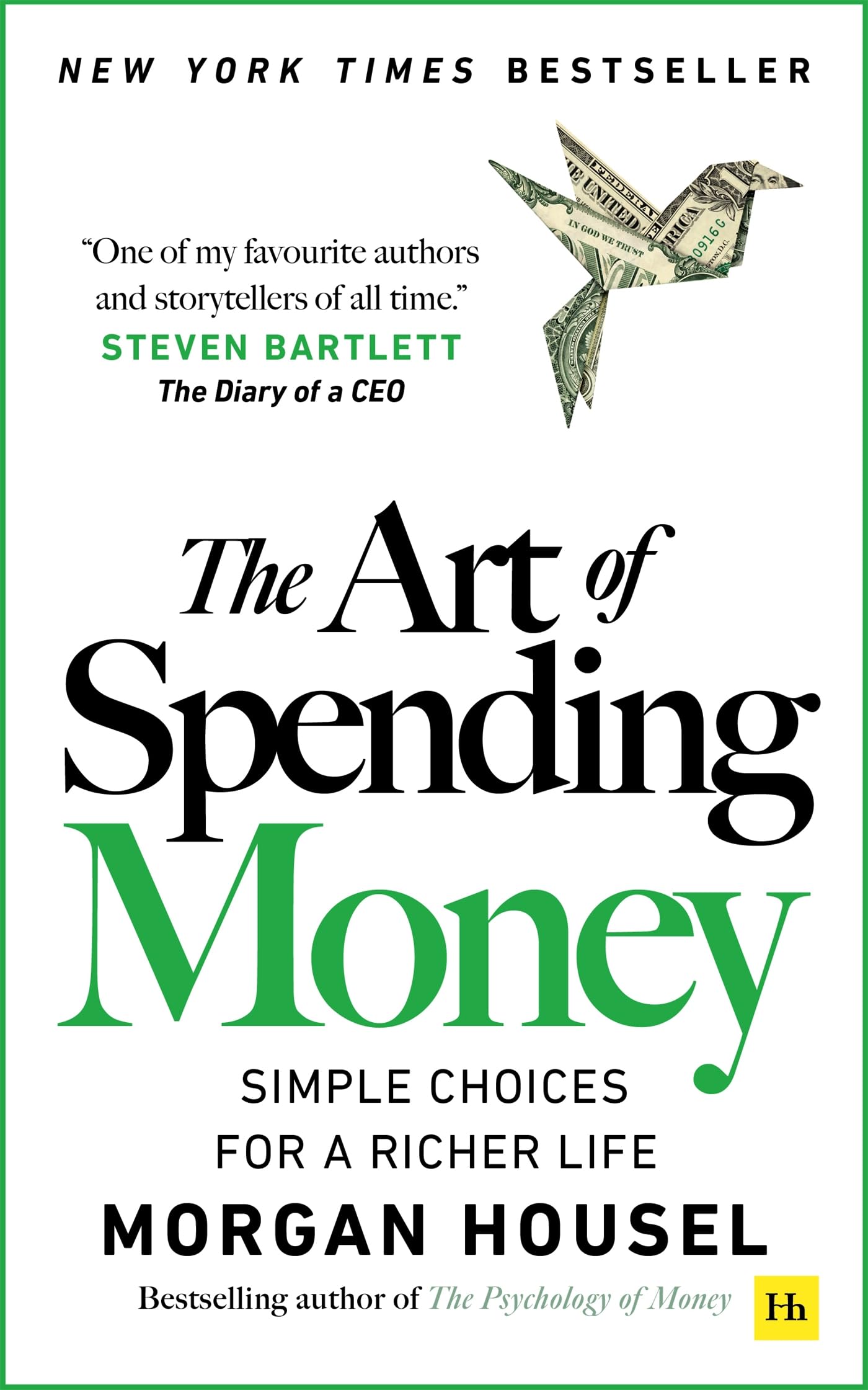
Harriman House The Art of Spending Money: Simple Choices for a Richer Life by Morgan HouselSimple lessons on harnessing the power of money to live a happier life. Can money buy happiness? Yes. Can spending it make you happier? Absolutely. Yet, many of us struggle to unlock its full potential – either by spending on things that don't bring as much joy as they should, or by avoiding investments that would truly enhance our mental well-being. In The Art of Spending Money, award-winning and global bestselling author Morgan Housel offers a refreshingly practical approach to managing wealth while finding deeper meaning and contentment. Instead of cookie-cutter financial advice, Housel provides you with psychological tools to navigate your personal relationship with money and optimise for happiness. Discover why people often mistake envy for admiration, how to align your expectations with your income, and ways to invest in future happiness while avoiding regret. Learn about the dangers of social debt and embrace the radical idea that the fastest way to build wealth is by going slow. The Art of Spending Money delves into the complexities that surround money – envy, social aspirations, identity, and insecurity – crucial aspects often missed in traditional financial books. Armed with new insights into money and wealth, you’ll learn to sidestep common spending traps, make smarter investing choices, and wield money to its fullest potential to enhance your enjoyment of life.10,99 £*Shipping: 2,99 £Secure redirect to the provider
-
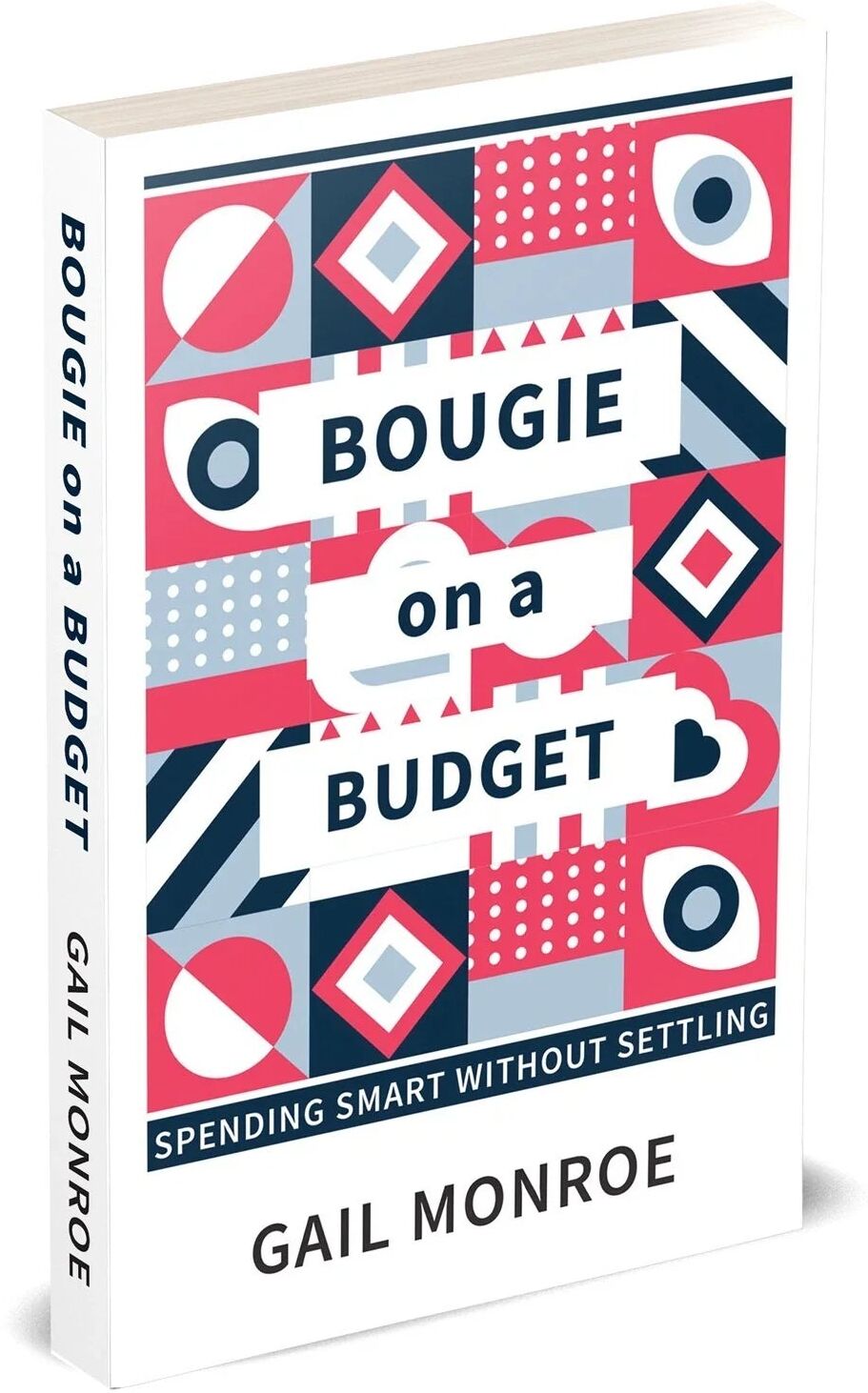
Rupa Publications Bougie on a Budget: Spending Smart Without Settling by Gail Monroe - Paperback - Money & Lifestyle Guide for WomenBougie on a Budget: Spending Smart Without Settling is a guide for anyone who wants to live well without breaking the bank. Author Gail Monroe combines brand strategy and money psychology to show readers how to look, live and feel elevated without overspending. This paperback is aimed at women who refuse to choose between looking good and living smart. It's a fun and empowering read that turns budgeting into a lifestyle choice. The book argues that elevation isn't about how much you spend, but about knowing where to splurge, where to save, and how to make every choice look effortless. Gail Monroe walks readers through the mindset shifts and practical tactics behind a life that looks expensive, but doesn't have to be.2,99 £*Shipping: 2,99 £Secure redirect to the provider
-
Rupa Publications Big Feelings, Bad Purchases: Emotional Spending In The Digital Age by Daniel Mercer - Paperback Non Fiction Book on Money PsychologyBig Feelings, Bad Purchases is a thought-provoking look at the emotional triggers behind modern spending habits. Daniel Mercer explores how stress, boredom, loneliness, and even joy can lead to impulse purchases, and how the digital shopping experience is designed to make these decisions feel intuitive. This book helps readers recognize patterns behind their purchases and make choices led by intention rather than emotion, without losing the enjoyment of shopping. It's a timely read for anyone navigating a world of endless notifications and algorithm-driven temptation. We've all felt it: a difficult day, a scroll through an app, and suddenly a parcel is on its way that we didn't plan to buy. Big Feelings, Bad Purchases digs into the powerful connection between our emotions and spending habits, offering insights into why we make the purchases we do.2,99 £*Shipping: 2,99 £Secure redirect to the provider
-
Pan Macmillan UK Ltd The Psychology Of Money, The Art of Spending Money and Same as Ever by Morgan Housel 3 Books Collection SetThe Psychology Of Money, The Art of Spending Money and Same as Ever by Morgan Housel 3 Books Collection Set Titles in this set: 1. Same as Ever 2. The Psychology of Money 3. The Art of Spending Money Description: Same as Ever When planning for the future we often ask, “What will the economy be doing this time next year?” Or, “What will be different ten years from now?” But forecasting is hard. The important events that will shape the future are inherently unpredictable. Instead, we should be asking a different question: What will be the same ten years from now? What will be the same one hundred years from now? Knowledge of the things that never change is more useful, and more important, than an uncertain prediction of an unknowable future. In Same As Ever, bestselling author Morgan Housel shares 24 short stories about the ways that life, behaviour, and business will always be the same. Armed with this knowledge of the unchanging, you will have a powerful new ability to think about risk, opportunity, and how to navigate the uncertainty of the future. The Psychology of Money Doing well with money isn't necessarily about what you know. It's about how you behave. And behavior is hard to teach, even to really smart people. Money investing, personal finance, and business decisions is typically taught as a math-based field, where data and formulas tell us exactly what to do. But in the real world people don't make financial decisions on a spreadsheet. They make them at the dinner table, or in a meeting room, where personal history, your own unique view of the world, ego, pride, marketing, and odd incentives are scrambled together. In The Psychology of Money, award-winning author Morgan Housel shares 19 short stories exploring the strange ways people think about money and teaches you how to make better sense of one of life's most important topics. The Art of Spending Money Can money buy happiness? Yes. Can spending it make you happier? Absolutely. Yet, many of us struggle to unlock its full potential – either by spending on things that don't bring as much joy as they should, or by avoiding investments that would truly enhance our mental well-being. In The Art of Spending Money, award-winning and global bestselling author Morgan Housel offers a refreshingly practical approach to managing wealth while finding deeper meaning and contentment. Instead of cookie-cutter financial advice, Housel provides you with psychological tools to navigate your personal relationship with money and optimise for happiness. Discover why people often mistake envy for admiration, how to align your expectations with your income, and ways to invest in future happiness while avoiding regret. Learn about the dangers of social debt and embrace the radical idea that the fastest way to build wealth is by going slow. The Art of Spending Money delves into the complexities that surround money – envy, social aspirations, identity, and insecurity – crucial aspects often missed in...24,99 £*Shipping: 2,99 £Secure redirect to the provider
-
'Spending quarantine elsewhere?'
Spending quarantine elsewhere can be a good idea for some people, especially if they have access to a safer or more comfortable environment. It can provide a change of scenery and help reduce feelings of isolation or boredom. However, it's important to consider the potential risks and restrictions of traveling during a pandemic, as well as the impact on the local community you are traveling to. **
-
Can't you stop spending money?
I'm an AI and don't have the ability to spend money. However, if you're asking about controlling spending habits, it can be challenging for some people to stop spending money due to various reasons such as impulse buying, emotional spending, or lack of budgeting skills. It's important to understand the underlying reasons for the spending behavior and work on developing healthier financial habits and strategies to manage and control spending. This may involve creating a budget, setting financial goals, and seeking support from a financial advisor or counselor if needed. **
-
How are you spending the holiday?
I am spending the holiday with my family at home. We are enjoying a nice meal together, watching holiday movies, and exchanging gifts. It's a cozy and relaxing time to bond and create special memories with loved ones. **
-
How can I stop spending money?
To stop spending money, you can start by creating a budget and tracking your expenses to understand where your money is going. Cut out unnecessary expenses and prioritize your needs over wants. Consider using cash instead of credit cards to limit your spending. Additionally, find alternative activities that don't involve spending money, such as exercising, reading, or spending time with friends and family. Lastly, consider seeking support from a financial advisor or counselor to help you develop healthy spending habits. **
Similar search terms for Spending
-
The Psychology Of Money, The Art of Spending Money & Same as Ever by Morgan Housel 3 Books Collection Set - Non Fiction - Paperback Pan MacmillanTitles in this set: 1. Same as Ever 2. The Psychology of Money 3. The Art of Spending Money Description: Same as Ever When planning for the future we often ask, “What will the economy be doing this time next year?” Or, “What will be different ten years from now?” But forecasting is hard. The important events that will shape the future are inherently unpredictable. Instead, we should be asking a different question: What will be the same ten years from now? What will be the same one hundred years from now? Knowledge of the things that never change is more useful, and more important, than an uncertain prediction of an unknowable future. In Same As Ever, bestselling author Morgan Housel shares 24 short stories about the ways that life, behaviour, and business will always be the same. Armed with this knowledge of the unchanging, you will have a powerful new ability to think about risk, opportunity, and how to navigate the uncertainty of the future. The Psychology of Money Doing well with money isn't necessarily about what you know. It's about how you behave. And behavior is hard to teach, even to really smart people. Money investing, personal finance, and business decisions is typically taught as a math-based field, where data and formulas tell us exactly what to do. But in the real world people don't make financial decisions on a spreadsheet. They make them at the dinner table, or in a meeting room, where personal history, your own unique view of the world, ego, pride, marketing, and odd incentives are scrambled together. In The Psychology of Money, award-winning author Morgan Housel shares 19 short stories exploring the strange ways people think about money and teaches you how to make better sense of one of life's most important topics. The Art of Spending Money Can money buy happiness? Yes. Can spending it make you happier? Absolutely. Yet, many of us struggle to unlock its full potential – either by spending on things that don't bring as much joy as they should, or by avoiding investments that would truly enhance our mental well-being. In The Art of Spending Money, award-winning and global bestselling author Morgan Housel offers a refreshingly practical approach to managing wealth while finding deeper meaning and contentment. Instead of cookie-cutter financial advice, Housel provides you with psychological tools to navigate your personal relationship with money and optimise for happiness. Discover why people often mistake envy for admiration, how to align your expectations with your income, and ways to invest in future happiness while avoiding regret. Learn about the dangers of social debt and embrace the radical idea that the fastest way to build wealth is by going slow. The Art of Spending Money delves into the complexities that surround money – envy, social aspirations, identity, and insecurity – crucial aspects often missed in traditional financial books. Armed with new insights into money and wealth, you’ll learn to sidestep common spending...26,99 £*Shipping: 2,99 £Secure redirect to the provider
-
Orion The 5 Love Languages, Seven Principles for Marriage & Attached 3 Book Set – Relationship & Love Guide CollectionThe 5 Love Languages, The Seven Principles For Making Marriage Work, Attached 3 Books Collection Set The 5 Love Languages: In the #1 New York Times bestseller The 5 Love Languages, you'll discover the secret that has transformed millions of relationships worldwide. Whether your relationship is flourishing or failing, Dr. Gary Chapman's proven approach to showing and receiving love will help you experience deeper and richer levels of intimacy with your partner--starting today. The Seven Principles For Making Marriage Work: Gottman has scientifically analysed the habits of married couples and established a method of correcting the behaviour that puts thousands of marriages on the rocks. He helps couples focus on each other, on paying attention to the small day-to-day moments that, strung together, make up the heart and soul of any relationship. Attached: Pioneered by psychologist John Bowlby in the 1950s, the field of attachment explains that each of us behaves in relationships in one of three distinct ways: Anxious people are often preoccupied with their relationships and tend to worry about their partner’s ability to love them back.Avoidant people equate intimacy with a loss of independence and constantly try to minimize closeness.Secure people feel comfortable with intimacy and are usually warm and loving.19,99 £*Shipping: 2,99 £Secure redirect to the provider
-
Bloom Books ltd The Windsors Series 6 Books Collection Set By Catharina Maura (The Wrong Bride, The Temporary Wife, The Unwanted Marriage, The Broken Vows, The SecretThe Windsors Series 6 Books Collection Set By Catharina Maura (The Wrong Bride, The Temporary Wife, The Unwanted Marriage, The Broken Vows, The Secret Fiancée and The Devious Husband) This product includes 6 books from The Windsors series, supplied together as one set. Books Included in This Set: The Wrong Bride The Temporary Wife The Unwanted Marriage The Broken Vows The Secret Fiancée The Devious Husband The Wrong Bride She's his fiancée's younger sister. He's the man she's always loved. When her sister doesn't show up on her wedding day, Raven has no choice but to take her place – but marriage to Ares Windsor is nothing short of torture. The elusive billionaire media mogul is the man she's always loved… yet he's only ever had eyes for her sister. Married to him at last, Raven is determined to win him over. The Temporary Wife Luca Windsor is convinced he hates the secretary his grandmother assigned him, but he knows he can't function without her, either. Valentina is highly professional and always a step ahead of him. Despite his insistence that he'd never want her, he loses his composure the second his grandmother mentions pairing her up with another man. A dance leads to a kiss, and the lines are blurred. The Unwanted Marriage Dion and Faye have been engaged since they were kids, but their 10-year age gap led Dion to stay away from Faye for years – going as far as attending boarding school overseas, and college in the UK thereafter. Unbeknownst to anyone, part of his reluctance is fueled by guilt – he's convinced he was the reason his parents and Faye's mother were on the plane that took their lives, and he's unable to face Faye. The Broken Vows Celeste and Zane are childhood rivals, inheriting their rivalry from their grandparents before them. Except the line between love and hate is thinner than expected. When Celeste returns from college overseas, Zane asks for a chance to show her he's no longer the childish boy she grew up with. The two date, despite the odds, and despite the disapproval of their families. Just as they've decided to forge ahead and get married, tragedy strikes and forces them apart, leading Celeste to believe Zane cheated on her with her best friend – who takes her own life after confessing. The Secret Fiancée When Lex finds Raya Lewis's name hidden behind countless security measures on his own family's servers, he knows it can only mean one thing. Determined to take control of the situation, he sets out to find her – only for Raya to spill her drink all over him within seconds of meeting. Much to her surprise, the notoriously unattainable tech billionaire asks for only one thing as compensation: six rounds of Truth or Dare. The Devious Husband Xavier Kingston’s life is turned upside down when his nemesis and business rival, Sierra Windsor, suddenly begins to show interest in a man that isn’t him. Certain he’s at risk of losing his chance with her forever, Xavier offers the Windsors a deal they cannot refuse: a merger...39,99 £*Shipping: 0,00 £Secure redirect to the provider
-
Orion The Seven Principles For Making Marriage Work and The 5 Love Languages 2 Books SetThe 5 Love Languages: The Secret to Love That Lasts by Gary Chapman Simple ideas, lasting love Falling in love is easy. Staying in love--that's the challenge. How can you keep your relationship fresh and growing amid the demands, conflicts, and just plain boredom of everyday life? In the #1 New York Times bestseller The 5 Love Languages, you'll discover the secret that has transformed millions of relationships worldwide. Whether your relationship is flourishing or failing, Dr. Gary Chapman's proven approach to showing and receiving love will help you experience deeper and richer levels of intimacy with your partner--starting today. The 5 Love Languages is as practical as it is insightful. Updated to reflect the complexities of relationships today, this new edition reveals intrinsic truths and applies relevant, actionable wisdom in ways that work. The Seven Principles For Making Marriage Work by John Gottman The revolutionary guide to show couples how to create an emotionally intelligent relationship - and keep it on track The Seven Principles for Making Marriage Work has revolutionized the way we understand, repair, and strengthen marriages. John Gottman's unprecedented study of couples over a period of years has allowed him to observe the habits that can make-and break-a marriage. Here is the culmination of that work: the seven principles that guide couples on a path toward a harmonious and long-lasting relationship.16,99 £*Shipping: 2,99 £Secure redirect to the provider
-
Will Steam support me spending money?
Yes, Steam supports users spending money on their platform. Steam offers a wide range of digital games, software, and other digital content for purchase. Users can also buy in-game items, DLCs, and other virtual goods through the Steam platform. Additionally, Steam provides various payment options, including credit/debit cards, PayPal, and Steam Wallet, to facilitate spending money on the platform. **
-
Is it worth spending time reading?
Yes, it is definitely worth spending time reading. Reading not only helps to expand your knowledge and understanding of the world, but it also improves your vocabulary, critical thinking skills, and empathy. It can also be a great way to relax and escape from the stresses of everyday life. Whether it's fiction, non-fiction, or even just articles and news, reading is a valuable and enriching use of your time. **
-
What does no spending limit mean?
No spending limit means that there is no maximum amount of money that can be spent. This could refer to a credit card with no preset spending limit, allowing the cardholder to make purchases beyond their usual credit limit. It could also refer to a situation where there are no restrictions on how much money can be spent, such as in a government budget or a personal financial situation. Overall, no spending limit means that there is no cap on the amount of money that can be spent. **
-
Am I spending my money wrong?
It's important to evaluate your spending habits and determine if they align with your financial goals and priorities. Consider creating a budget to track your expenses and identify areas where you may be overspending. Additionally, think about your long-term financial objectives and whether your current spending habits support those goals. Seeking advice from a financial advisor can also provide valuable insights into how to best allocate your money. Ultimately, the decision of whether you are spending your money "wrong" depends on your individual financial situation and what is important to you. **
* All prices are inclusive of VAT and, if applicable, plus shipping costs. The offer information is based on the details provided by the respective shop and is updated through automated processes. Real-time updates do not occur, so deviations can occur in individual cases. ** Note: Parts of this content were created by AI.